

The landscape of corporate leadership has shifted. Decades ago, management was often seen as an art form—a blend of charisma, intuition, and “gut feeling.” Today, that art has been reinforced by a rigorous framework of science. In the modern business ecosystem, statistics have evolved from a back-office utility into the primary language of strategy.
As organizations navigate a world defined by volatility and “Big Data,” the ability to interpret numbers is no longer a niche skill for analysts; it is a foundational requirement for any effective manager.
The Analytical Gap in Modern Leadership
One of the greatest challenges facing the current workforce is the “Analytical Gap.” While we have more data than ever before, the ability to turn that data into actionable strategy is still rare. Managers are often overwhelmed by metrics—KPIs, conversion rates, churn models—without understanding the underlying statistical significance of these figures.
For students and aspiring professionals, bridging this gap is the priority. The transition from academic theory to corporate application can be daunting. Often, the most effective way to master these nuances is through structured guidance. For instance, those struggling to synthesize complex data into a cohesive report might seek out management assignment help from MyAssignmentHelp, a resource that allows learners to see how high-level theory applies to practical business case studies. This kind of targeted support ensures that future leaders don’t just “see” data, but actually understand the narrative it tells.
Why Statistics is the Modern “Pulse” of Business
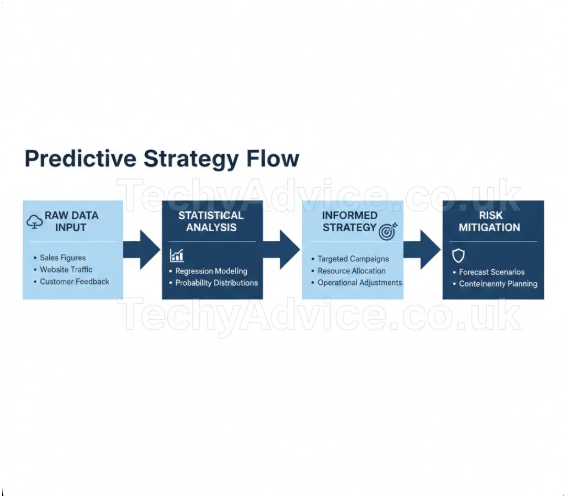
Statistics allow managers to move from reactive decision-making to predictive strategy. Here is how statistical literacy is solving modern management challenges:
1. Risk Mitigation and Probability
In a globalized economy, risk is constant. Whether it’s supply chain disruptions or shifting currency values, managers use probability distributions to prepare for “Black Swan” events. Without a statistical foundation, a manager is essentially guessing. With it, they are calculating the “Expected Value” of every decision.
2. Enhancing the Customer Experience
Personalization is the gold standard of 2026 marketing. This isn’t achieved through broad strokes, but through regression analysis and cluster sampling. By understanding which variables correlate with customer loyalty, managers can allocate resources to the 20% of activities that drive 80% of the results.
3. Operational Efficiency
From “Six Sigma” to “Lean Manufacturing,” the most successful operational models are rooted in reducing variance. Statistics provide the tools to identify where a process is breaking down, allowing for surgical interventions rather than expensive, company-wide overhauls.
From Theory to Practice: Starting with Research
For those looking to enter this field, the journey starts with experimentation. You cannot manage what you cannot measure, and you cannot measure what you do not understand. For university students or junior analysts, the best way to build this muscle is through project-based learning.
If you are looking for a starting point, exploring a variety of statistics project ideas can provide a sandbox for testing these theories. Whether it’s analyzing local market trends or running a hypothesis test on social media engagement, these projects build the “statistical intuition” required for upper-level management roles.
Overcoming the “Fear of Numbers”
A significant red flag in modern management is the “math phobia” that persists in creative or human-centric departments. However, the most successful HR directors and Creative Leads in 2026 are those who use data to back up their “soft skill” initiatives.
- In HR: Using statistics to track employee burnout rates and turnover predictors.
- In Marketing: Using A/B testing to validate creative directions before a full-scale launch.
- In Sales: Utilizing lead scoring models to prioritize high-value prospects.
Conclusion: The Future belongs to the Data-Literate
The “Modern Management Challenge” isn’t a lack of information; it’s the lack of a filter. Statistics serve as that filter. As we move further into a decade defined by AI and automated decision-making, the human manager’s role is to provide the ethical and strategic oversight of those numbers.
About The Author
Ruby Walker I’m a lead academic consultant at MyAssignmentHelp, where I focus on helping students navigate the intersection of complex theory and practical application. With a background in organizational strategy, I’m passionate about empowering the next generation of leaders to master data-driven decision-making. When I’m not analyzing educational trends, you can usually find me exploring the latest shifts in digital business technology.