
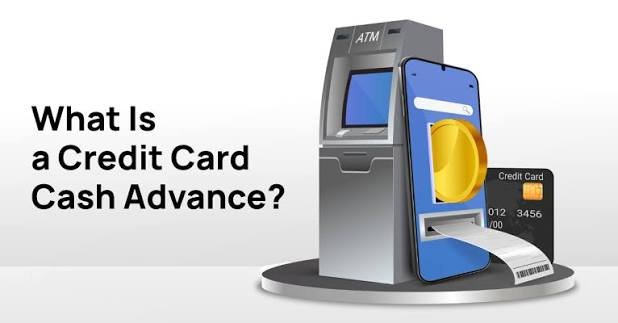

Every credit card carries a feature that most holders never examine until they need it, at which point they use it without examining it. Cash access — the ability to obtain currency rather than goods from a credit line — is priced, structured, and limited quite differently from ordinary purchasing, and the differences are large enough that using one interchangeably with the other is a costly mistake.
This is a technical walkthrough of how cash access works, what it costs across its various forms, and what the alternatives look like when the underlying need is simply “I require funds sooner than my income provides them.”
How the Cash Advance Is Actually Structured
Start with the mechanics, because they explain the pricing.
A credit card purchase creates a receivable that the issuer expects to be repaid on a predictable schedule, secured by an established merchant relationship and reversible through chargeback if something goes wrong. It carries interchange revenue for the issuer and behavioral data that supports future underwriting. A cash advance has none of these properties. The funds leave the system immediately, there is no merchant to claw back from, no interchange is earned, and empirically, cash advance usage correlates with elevated default risk. From the issuer’s perspective it is a riskier, less profitable, less recoverable extension of credit.
The pricing reflects this in three distinct ways, and all three apply simultaneously.
The transaction fee is charged upfront, typically as a percentage of the amount with a stated minimum. The minimum is what makes small advances disproportionately expensive.
The interest rate is separate from and usually higher than the purchase rate. It appears as its own line in the cardholder agreement and applies only to the advance balance.
The absence of a grace period is the component most often missed. Interest begins accruing on the transaction date. There is no window in which paying promptly avoids interest entirely, which means even an advance repaid within days carries both the fee and some interest.
There is a fourth structural detail worth knowing: the cash advance limit is usually a subset of the total credit limit, often a small fraction of it. Holders sometimes discover this at an ATM when a request is declined despite substantial available credit.
Payment Allocation and Why Advances Persist
The behavior of an advance balance over time surprises people, and the reason is payment allocation.
Under common allocation rules, payments up to the minimum are applied at the issuer’s discretion, which in practice usually means to the lowest-rate balance first. Only amounts above the minimum are required to be applied to the highest-rate balance. A cardholder making minimum payments while carrying both a purchase balance and a cash advance can therefore watch the purchase balance decline while the advance — the expensive part — barely moves.
The practical consequence is that clearing an advance requires deliberate action. Paying substantially more than the minimum, ideally the full advance amount plus the current statement’s purchases, is the only reliable way to eliminate it. Treating it as “part of the balance” and paying it down gradually is how a short-term advance becomes a long-term expense.
The Broader Category of Card-to-Cash Options
Issuer advances are not the only route from credit line to currency, and the alternatives carry their own structures.
Balance transfer checks or convenience checks, issued by many card companies, function similarly to advances but sometimes with promotional rates. They typically carry their own fee and, critically, promotional terms that revert on a specific date. They are cheaper than advances when the promotional period is genuinely sufficient and considerably more expensive when it is not.
Peer-to-peer transfer apps funded by credit card allow a user to send money to another person or to themselves. Issuers vary in whether they classify these as purchases or advances, and the classification determines whether grace-period rules apply. This is worth verifying in advance rather than discovering on a statement.
Third-party conversion services form a distinct category, converting card-funded purchases of gift cards or goods into cash for a spread. In several markets these operate as an established consumer category — what is often described as 신용카드 깡 — with published rates and processing windows. The economics resemble other short-duration liquidity products: the spread covers funding cost, settlement risk, and margin. Two cautions apply specifically here. Cardholder agreements frequently restrict such patterns, and enforcement falls on the cardholder rather than the service. And the transaction converts credit into cash without reducing the resulting balance, so the obligation plus the spread must still be repaid.
Alternatives Worth Comparing First
If the underlying need is short-term liquidity, several options often price better and deserve comparison before any card-based route.
Personal loans from banks or credit unions typically carry rates well below cash advance rates, with fixed terms that force repayment rather than allowing indefinite carry. The drawback is timing; approval and funding can take days, which rules them out for genuine emergencies but not for foreseeable ones.
Employer payroll advances have expanded considerably and frequently carry minimal or no fee, since the employer is essentially adjusting the timing of money already owed.
Negotiating with the creditor whose bill created the pressure is the most overlooked option. Utilities, medical providers, and many service companies maintain hardship or installment programs that are rarely advertised and often granted on request. Splitting a bill across three months at no interest is strictly better than borrowing at any rate to pay it in one.
Overdraft lines of credit, distinct from overdraft fees, are available at many institutions and often price below cash advances, though the flat-fee version is usually worse.
Closing Thoughts
Credit card cash access is a legitimate feature with a specific, well-defined price, and that price is high because the underlying risk is high. Used deliberately for a genuine short-duration need and repaid quickly, it is expensive but bounded. Used casually or repeatedly, it compounds faster than nearly any other consumer credit product.
The decision framework is straightforward. Confirm the total cost including fee, rate, and the absence of a grace period. Verify your cash advance limit before relying on it. Plan the specific repayment, remembering that allocation rules work against you. Compare against loans, employer advances, and creditor negotiation before committing. And if you find yourself doing this more than once or twice a year, treat the frequency itself as the signal — that pattern indicates a structural shortfall, and no cash access product can fix one.